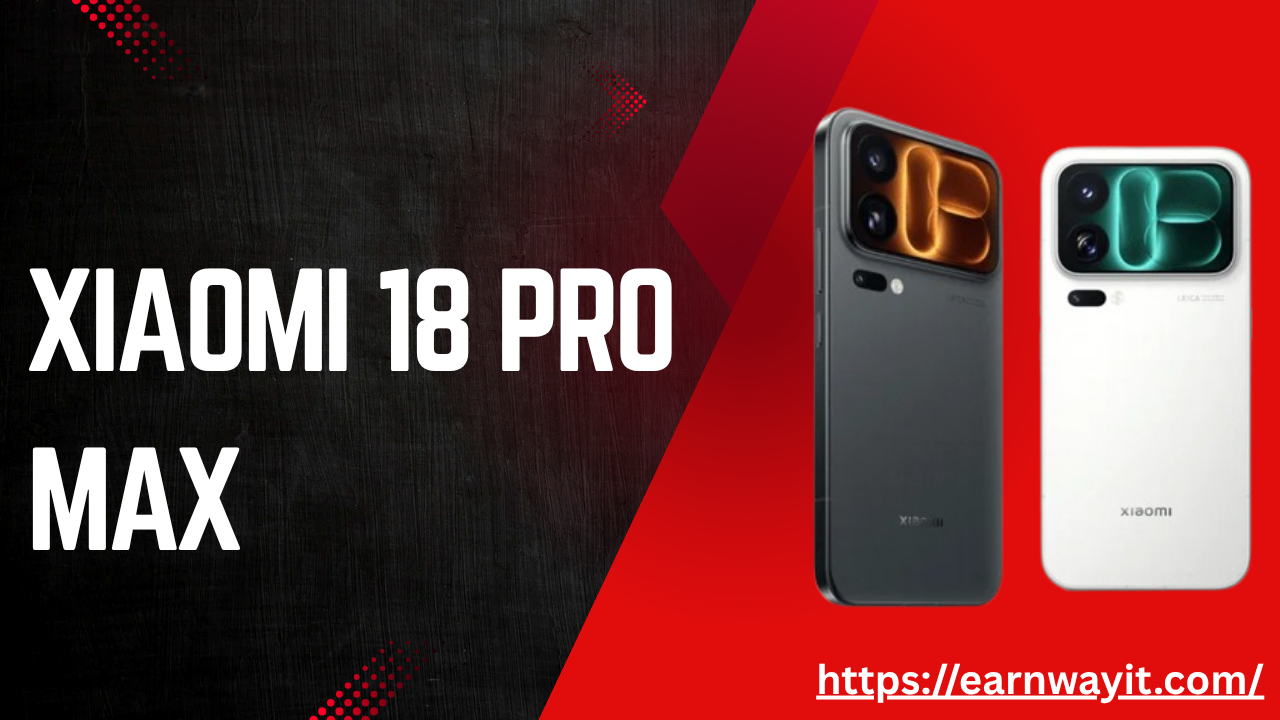
Xiaomi is about to make a statement in the flagship smartphone space. The company has officially confirmed that the Xiaomi 18 Pro launch will take place in China on September 23 at 19:00 local time—which translates to 2 PM in Kenya and 4:30 PM IST. But this isn’t just another annual refresh. Xiaomi is doing something it has never done before: splitting its flagship lineup. The standard Xiaomi 18 has been pushed to late 2026 or early 2027, leaving the stage entirely to the Xiaomi 18 Pro and Xiaomi 18 Pro Max.
If you’re wondering whether this move is a gamble or a masterstroke, the early hardware details suggest Xiaomi is swinging for the fences. Here’s a deep dive into everything confirmed so far, plus what it means for buyers, the industry, and the never-ending battle for battery supremacy.
Two Models, Two Massive Batteries
The headline feature is undeniably the battery. The Xiaomi 18 Pro packs a 7,000mAh cell, while the Xiaomi 18 Pro Max pushes that to a staggering 8,500mAh. To put that in perspective, the Pro Max carries 1,500mAh more than its smaller sibling—roughly 21% extra capacity—and a full 1,000mAh more than last year’s Xiaomi 17 Pro Max.
But raw numbers only tell part of the story. Xiaomi says these are silicon-carbon cells with a 32% silicon content. This matters because traditional graphite anodes have a hard ceiling on energy density. Silicon can hold far more lithium, but it swells and degrades quickly. Hitting 32% silicon without compromising cycle life is genuinely difficult engineering. For you, the buyer, it means more capacity without a thicker, heavier phone.
That said, don’t expect battery life to scale linearly with capacity. Real-world endurance depends on the chip’s efficiency, the display’s power draw, and how HyperOS 4 manages background tasks. The 8,500mAh figure is impressive, but it’s not a record—some budget phones already ship with 11,000mAh batteries. Xiaomi’s achievement is cramming this much juice into a flagship chassis without turning it into a brick.
A 2nm Chip and the Snapdragon Question
Xiaomi has confirmed both phones will use a 2nm platform but stopped short of naming the chip. The timing is telling, though. Qualcomm’s Snapdragon Summit runs from September 22 to 24 in Hawaii, where the company is expected to unveil two new Snapdragon 8 Elite chips. Xiaomi’s launch event lands the day after the summit opens.
The industry consensus points to the Snapdragon 8 Elite Gen 6 Pro for the Pro Max and a slightly tamer variant for the standard Pro. The 2nm manufacturing process means tighter transistor packing and better power efficiency. In plain English: the chip draws less power for the same workload, which directly benefits battery life. Combined with a 4,000-nit display that Xiaomi claims is 20% more efficient than its predecessor, the 18 Pro series could deliver genuinely all-day—or even two-day—endurance for moderate users.
Leica Cameras: Two 200MP Sensors, But Questions Remain
Xiaomi is sticking with Leica, and the camera setup is ambitious. Both the Pro and Pro Max get a 200-megapixel main camera and a 200-megapixel periscope telephoto sensor. Leaks suggest the main camera has an f/1.67 aperture, while the periscope offers 3.2x optical zoom with an f/2.4 aperture.
Here’s the catch: Xiaomi hasn’t published sensor sizes or detailed aperture specs for both models. Matching megapixel counts do not guarantee identical image quality. A 200MP sensor on a smaller chip will struggle in low light compared to a larger one. Buyers should wait for real-world camera samples before assuming the Pro and Pro Max shoot the same.
That said, the Leica partnership has matured significantly over the past few generations. Expect natural color science, excellent dynamic range, and a periscope lens that finally makes zoom shots usable rather than merely acceptable.
The Rear Screen Grows Up
The secondary display on the back—introduced with the Xiaomi 17 series—is returning, but it’s been completely rethought. Xiaomi calls it the “Versatile Back Screen,” and it’s now flush with the camera module rather than awkwardly protruding. The bezels around it have been narrowed, and reports suggest the panel could grow from 2.1 inches to around 4 inches.
The real upgrade is software. HyperOS 4 brings AI-generated cards for the rear screen. Instead of being limited to preset widgets, you can describe what you want—an egg timer, a water-intake tracker, a Pomodoro timer—and the system builds it on the fly. Xiaomi says the previous generation saw over 4 million daily interactions with rear-screen cards, so there’s clearly demand for this feature.
Is a rear screen a gimmick? For some, yes. But Xiaomi is betting that AI-driven customization turns it into a genuinely useful tool rather than a novelty. Only time will tell.
Display and Design: Privacy Meets Brightness
The front display is another area where Xiaomi is pushing boundaries. The bezels measure just 0.99mm, and the panel uses Xiaomi’s new M11 luminescent material with a peak brightness of 4,000 nits. More importantly, Xiaomi has integrated a hardware-level privacy display. This isn’t a screen protector or a software filter—it’s built into the panel itself, similar to Samsung’s approach on the Galaxy S26 Ultra. The feature automatically activates on sensitive screens like password entry, payments, and private messages.
Colors include Black, White, and a new Starry River Blue. The frame is a micro-arc quad-curved metal design, which should feel premium in hand while maintaining structural rigidity.
HyperOS 4: The Software Glue
Both phones ship with HyperOS 4 out of the box, based on Android 17. Xiaomi’s software has improved dramatically over the past two years, and HyperOS 4 promises tighter integration between the rear screen, AI features, and power management. If Xiaomi can deliver a clean, ad-free experience (a big “if” for some markets), HyperOS 4 could be a genuine selling point rather than an afterthought.
Pricing: Expect a Hike
Xiaomi hasn’t announced prices yet, but the writing is on the wall. Memory costs have skyrocketed. Xiaomi president Lu Weibing said in May that RAM for a 12GB/512GB phone now costs about CNY 1,500 more than in early 2025. The Xiaomi 17 Pro started at CNY 4,999, and the 17 Pro Max at CNY 5,999. Leaks suggest the 18 Pro could start at CNY 6,999 and the Pro Max at CNY 7,999—roughly KES 135,000 and KES 154,000, respectively.
Lu Weibing has already acknowledged that prices will rise but insists they’ll be “reasonable” given the upgrades. Whether buyers agree is another matter entirely.
Final Thoughts
The Xiaomi 18 Pro launch on September 23 is shaping up to be one of the most significant flagship events of the year. The combination of a 2nm chip, silicon-carbon batteries, dual 200MP Leica cameras, and an AI-powered rear screen makes these phones genuinely exciting—not just iterative upgrades.
The decision to delay the standard Xiaomi 18 is intriguing. It mirrors Apple’s strategy of staggering releases, but it also risks alienating buyers who want a smaller, cheaper flagship. Xiaomi is clearly betting that the Pro and Pro Max can carry the lineup on their own.
For now, all eyes are on September 23. If Xiaomi can stick the landing on software optimization and pricing, the 18 Pro series could be the Android flagship to beat in late 2026.