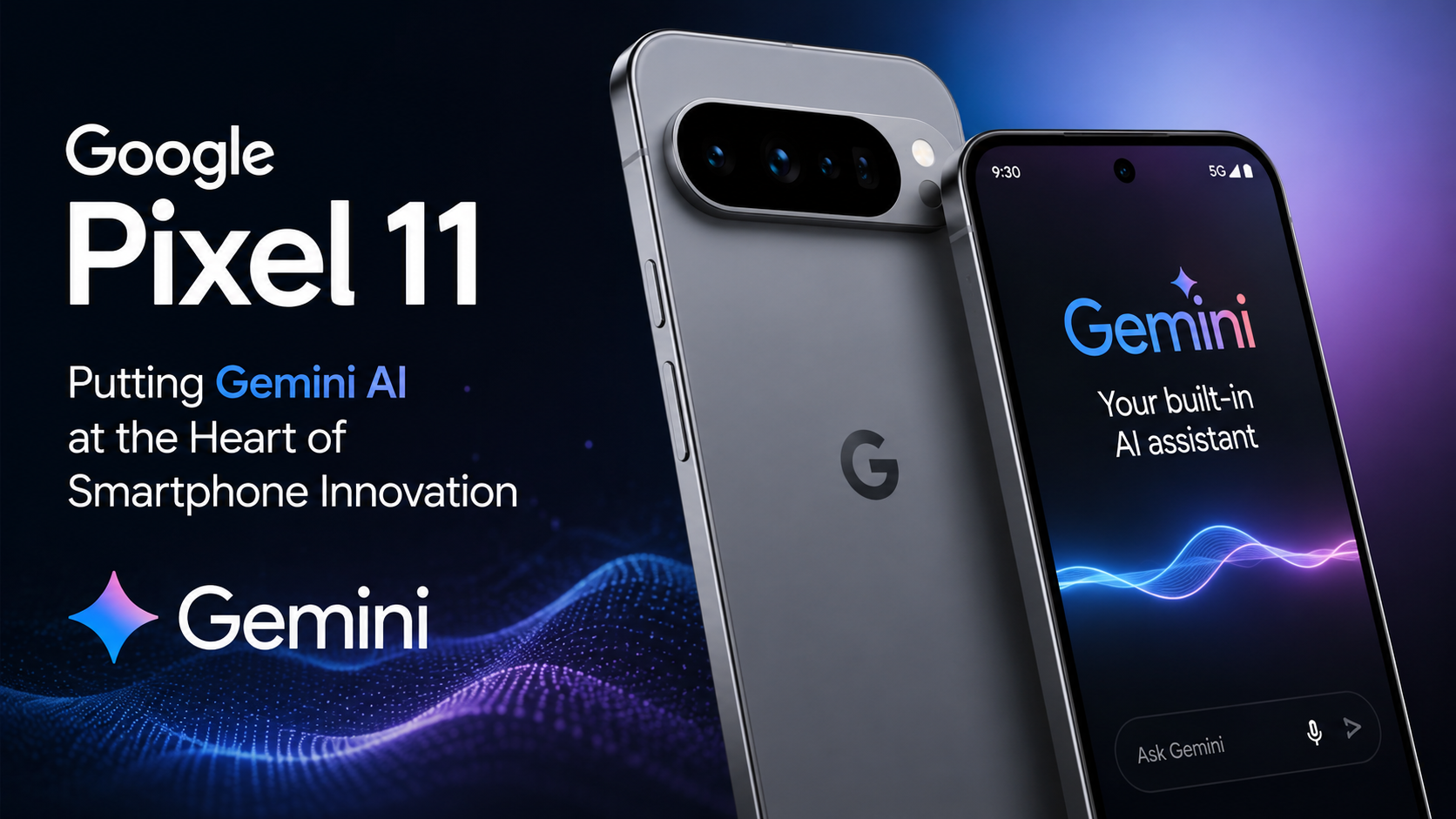
On August 12, 2026, Alphabet unveiled its highly anticipated Pixel 11 smartphone lineup. But this year’s hardware launch was about far more than cameras, displays, or processors. Google placed its most advanced version of Gemini yet at the very center of the devices—a strategic move that comes just weeks before Apple is expected to roll out a rebuilt Siri powered by the very same Google AI models.
The new lineup includes the Pixel 11, Pixel 11 Pro, Pixel 11 Pro XL, and Pixel 11 Pro Fold. While the hardware has seen incremental improvements, the real story is software: Gemini Intelligence, a suite of artificial intelligence features designed to understand what users are doing on their phones and take action across different applications.
What Is Gemini Intelligence?
Gemini Intelligence represents a fundamental shift in how users interact with their smartphones. Rather than functioning as a standalone chatbot that users must open separately, Gemini Intelligence works directly inside the phone’s operating system. It can connect information from messages, calendars, maps, and other Google services, then suggest or carry out next steps.
For example, Gemini Intelligence can check availability, compare travel options, or begin a restaurant reservation without users having to hop between multiple apps. It can also order groceries, book rides, or get coffee on behalf of U.S.-based users. Perhaps most impressively, Gemini can call businesses directly for table reservations or appointments, with users able to take over or stop tasks at any point.
Rick Osterloh, Google’s devices chief, described Gemini Intelligence in an exclusive CNBC interview as “a totally new way to interact with a computer”. He explained that for the last 10 to 15 years, not much has changed in how people use laptops and mobile phones—but that, in his view, is about to change dramatically.
Key Features of Pixel 11’s Gemini Experience
Multi-Step Task Automation Across 40+ Apps
Gemini on the Pixel 11 series has been updated to handle even more complex multi-step tasks across applications, expanding to more than 40 apps and counting. This means users can complete actions rather than simply receive answers. Gemini Intelligence connects Calendar, Maps, Messages, and numerous other services to handle tasks without constant app-hopping.
Proactive Assistance and Glanceable Cards
The Pixel 11 family generates glanceable cards inside apps as users go about their day. If a friend messages about an upcoming trip, a card appears with flight details showing whether it’s on time or delayed. When texting about dinner plans, the phone offers to secure a reservation automatically. These proactive suggestions appear in many places—saving events to Calendar, adding locations to Maps, or storing membership numbers in Google Wallet.
Gboard Rambler Voice Transcription
Rambler is a Gemini-powered voice transcription feature built specifically for the way people actually talk. Rather than providing literal word-for-word transcription, Rambler filters out filler words like “um” and “ah,” captures intent, and delivers clean, concise text. Users can also ask Gemini to change the style, expand content, or add emoji.
Scam Detection and Security
Osterloh specifically highlighted scam detection as a capability that distinguishes Google’s experience. Gemini Intelligence is designed with privacy in mind, requiring explicit user control, protecting data with Private AI Compute, and providing clear status updates.
Sign Language Translation
Google’s DeepMind lab created a sign-language-to-text model called SL2T that debuts first on the Pixel 11 line. This allows deaf and hard of hearing users to sign at their phone to search the web, write messages, and converse with Gemini. Live Transcribe has also been expanded to support American Sign Language.
Camera AI Features
The Pixel 11 introduces Magic Capture, which picks the best frames from hundreds captured between when users press start and end. The feature auto-crops and unblurs frames to make them ready for sharing. Pro models support 120x Super Zoom, while Instant Night Sight takes 4.5x less time than the previous generation.
HiLight Visual Notifications
On Pro models, HiLight uses colored LED lights built around the camera’s flash to provide glanceable notifications when the phone is face down. When users prompt Gemini, it glows in different patterns to signal listening, thinking, or responding.
Powered by Tensor G6
All Pixel 11 phones run on Google’s new Tensor G6 processor, manufactured using a 2nm process. The chip features a TPU with 50% more compute power and higher memory bandwidth. Paired with the latest Gemini Nano model, it runs on-device AI tasks up to 3.5 times faster while using up to 3.5 times less energy. Google claims 25% faster browsing and 20% better power efficiency.
Pricing and Availability
The Pixel 11 series starts at $899 for the base model, with the Pixel 11 Pro at $1,099, the Pixel 11 Pro XL at $1,299, and the Pixel 11 Pro Fold at $1,899. All models start at 256GB of storage. Pre-orders opened on August 12, with general availability beginning August 20.
The Apple Factor: Competing With a Customer
The launch puts Google in an unusual position: competing directly with one of its biggest AI customers. Apple is rebuilding Siri around Google’s Gemini models, pursuing many of the same broad goals Google is now showcasing on Pixel: understanding personal information, recognizing what is happening on screen, and taking actions across apps.
Asked whether Pixel gives Google an early chance to showcase Gemini before it reaches iPhone users, Osterloh pushed back on the idea that the two experiences will be the same. “I think obviously Pixel and iPhone are going in very different directions,” he said. He pointed to features like scam detection, Rambler, and deeper integration of Gemini across Android as capabilities that distinguish Google’s experience. “All these things are unique to Android and Gemini Intelligence,” he said.
Will AI Drive Upgrades?
The question for both Google and Apple is whether increasingly capable AI is enough to convince consumers to buy new phones. Osterloh acknowledged that AI is not yet the top reason people upgrade their devices, though he said it has moved sharply higher among consumers in recent years.
Counterpoint Research indicates that AI currently ranks around sixth or seventh among consumers’ reasons for upgrading a smartphone, but has climbed one to two spots in its latest surveys as Gemini and Apple Intelligence have become more capable. Tarun Pathak, research director at Counterpoint, said compelling use cases and greater consumer awareness will be critical to turning that growing interest into actual upgrades.
According to Counterpoint, generative AI-capable smartphones are forecast to account for 45% of global shipments in 2026, up from 36% in 2025. Apple and Samsung continue to lead the segment, supported by their scale and strong premium portfolios. Counterpoint expects Apple Intelligence to be a catalyst for iPhone upgrades, noting that Apple has more generative AI-capable smartphones already in consumers’ hands than any other brand.
The Memory Shortage Challenge
Google is also navigating another industrywide pressure: a shortage of memory components pushing hardware costs higher. “There’s quite clearly a shortage of memory, both RAM memory and flash memory,” Osterloh told CNBC.
The squeeze is forcing consumer electronics companies to raise prices. Osterloh indicated that Google expects additional pressure on its own devices. “What’s happening in the near term, I think, is everyone’s needing to raise their prices,” he said. “We’ve also discussed that we will need to raise ours, like all the other industry players”.
Industry researchers estimate DRAM prices nearly doubled during the first quarter of 2026. Gartner projects DRAM prices could rise around 125% in 2026 and NAND flash by 234%. The AI boom has triggered this global shortage as factories shift capacity toward AI-focused memory.
The Future of AI on Smartphones
Google ultimately sees Gemini becoming far more central to how people use their devices. Osterloh told CNBC that he believes it could eventually become the primary way people use their phones, laptops, and other devices.
The Pixel 11 generation gives Google its first chance to test whether a more autonomous AI assistant can meaningfully change smartphone behavior. Apple will soon make a similar bet with a far larger installed base.
For now, Google is betting that the combination of agentic AI, deep system integration, and unique features like Rambler, scam detection, and sign language translation will convince users that Pixel offers something iPhone cannot match. Whether consumers agree remains the multi-billion-dollar question.